The Himalayan Roots of Authentic Yoga: Why It Matters for Your Training in Bali
Core Insights at a Glance
- Authentic yoga lineage preserves traditional Vedic wisdom from Patanjali's Yoga Sutras and the Hatha Yoga Pradipika.
- Traditional guru-shishya parampara transmission provides nuanced corrections for pranayama, bandhas, and shatkarmas.
- Small cohort sizes prevent commercialization, fostering genuine spiritual transformation and deep community connection.
- Balanced approach integrates asana alignment with meditative stillness, philosophy, and yogic lifestyle ethics.
Table of Contents
- 1. What "Himalayan Roots" Really Means
- 2. Why Lineage and Authenticity Matter in Teacher Training
- 3. Core Elements of Himalayan Yoga You Should Experience
- • Pranayama as a Science of Life Energy
- • Meditation and Sense Withdrawal
- • Philosophy That Guides Daily Practice
- • Asana Aligned with Breath and Mind
- 8. How to Spot an Authentic Yoga School in Bali
- • Who Are the Teachers and What Is Their Background?
- • What Does the Curriculum Actually Include?
- • Is the Training Residential and Immersive?
- • Are They Transparent About Certification?
- 13. What a Typical Day Looks Like in a Himalayan-Inspired Training
- 14. Is This Suitable for Beginners?
- 15. Common Questions & Concerns When Choosing a TTC in Bali
- • "Will I Be Expected to Be Spiritual or Religious?"
- • "What If I Can't Do Advanced Poses?"
- • "Is It Safe to Travel Alone to Bali for Training?"
- • "How Do I Know the School Isn't Just Using 'Himalayan' as Marketing?"
- 20. How the Himalayan Roots Connect to Your Training in Bali
- 21. Frequently Asked Questions
- • 1. What exactly are the "Himalayan roots" of yoga?
- • 2. Do I need prior yoga experience to join a Himalayan-style teacher training in Bali?
- • 3. How is Himalayan yoga different from modern fitness yoga?
- • 4. Will I learn to teach meditation and pranayama, or just asana?
- • 5. How can I verify a school's claim of "authentic" or "Himalayan" teaching?
- • 6. Is a 200-hour yoga teacher training in Bali enough to start teaching?
- • 7. What should I expect from daily life during a residential training?
- • 8. Can I join a yoga teacher training in Bali if I'm travelling alone?
- 30. Conclusion and Next Steps
If you're researching yoga teacher training in Bali, you've likely seen schools claim their teaching is "authentic," "traditional," or rooted in ancient lineages. But what does that actually mean—and why should it matter to you?
This article explains the Himalayan roots of authentic yoga in clear, practical terms: where these teachings come from, what makes them different from modern fitness-style yoga, and how to spot a programme that honours this depth without over-promising. You'll also learn what to look for when choosing a yoga TTC in Bali so your training is grounded in real wisdom, not just buzzwords.
What "Himalayan Roots" Really Means
The Himalayas have been a living classroom for yogis for thousands of years. Sages, ascetics, and masters retreated to these high mountains to practise in silence, away from distraction. Over centuries, they refined techniques for breath, mind, and body—and passed them down through an unbroken teacher-to-student lineage known as guru-shishya parampara.
When a school refers to the "Himalayan roots of authentic yoga," it's pointing to this tradition: teachings that combine the Yoga Sutras, Tantric philosophy, and practical methods like pranayama and meditation, transmitted orally and experientially by masters who trained in the Himalayas.
This is fundamentally different from yoga that focuses mainly on physical postures for fitness. Himalayan yoga is holistic: it integrates ethics (yama/niyama), breath science (pranayama), meditation (dhyana), philosophy, and asana—so your practice becomes a complete path of transformation, not just a workout.
Why Lineage and Authenticity Matter in Teacher Training
You don't need to be an academic scholar to benefit from lineage—it matters for three core reasons:
- Depth of Knowledge: Teachers trained in a living Himalayan tradition carry more than book-learning. They bring oral instructions, subtle cues, and time-tested methods that are hard to find in short, commercial courses.
- Safety and Progression: Authentic lineages emphasise correct posture, breath awareness, and gradual progression—especially in pranayama and meditation—greatly reducing the risk of strain or confusion.
- Teaching Confidence: When you learn from a clear lineage, you gain a coherent framework to teach from, not just a random collection of poses. This empowers you to explain why you're teaching something, not just what.
In short, lineage doesn't make yoga better in a spiritual snobbery sense; it makes your training more reliable, structured, and rooted in methods that have been refined over generations.
Core Elements of Himalayan Yoga You Should Experience
If you're choosing a yoga teacher training in Bali, look for a curriculum that includes these core elements commonly found in Himalayan traditions:
Pranayama as a Science of Life Energy
In the Himalayan system, pranayama is not just "breathing exercises." It's the science of expanding and directing prana (life force) through controlled breath, mantra awareness, and subtle attention.
Practices move through stages: inhalation (puraka), retention (kumbhaka), and exhalation (rechaka), coordinated with focused mental awareness. A strong programme will teach diaphragmatic breathing first, then layer in techniques that prepare you for meditation—because in this tradition, pranayama is the bridge between body and mind.
Meditation and Sense Withdrawal
Himalayan yoga treats meditation (dhyana) as a trained skill, not a vague idea of "relaxing." You learn to stabilise attention, withdraw the senses (pratyahara), and work with concentration (dharana) before deeper meditation. This step-by-step approach prevents frustration and makes meditation practical for daily life.
Philosophy That Guides Daily Practice
Philosophy isn't just theory here. The yamas (non-violence, truthfulness, non-stealing, moderation, non-greed) and niyamas (purity, contentment, discipline, self-study, surrender) are lived ethics that shape how you practise and teach. Himalayan lineages also integrate Tantric and Vedic insights, giving context to rituals, mantras, and lifestyle choices.
Asana Aligned with Breath and Mind
Postures are taught with close attention to alignment, breath flow, and mental steadiness. In Himalayan-influenced programmes, asana prepares the body for long sitting, pranayama, and meditation—so the physical practice serves the larger aim of inner stability.
How to Spot an Authentic Yoga School in Bali
Bali has many yoga schools. To find one that truly honours Himalayan roots without over-claiming, ask these practical questions:
Who Are the Teachers and What Is Their Background?
Look for teachers who:
- Have trained in recognised ashrams or with masters from Himalayan lineages (such as Rishikesh, Uttarakhand, or established Himalayan institutes).
- Can explain their lineage simply: who taught them, where, and in what tradition.
- Emphasise both personal practice and philosophy, not just Instagram-worthy asana.
At YogaGarhi, our programmes are led by Yogacharya Sachin and master teachers who carry deep lineage-grounded experience. Learn more about our teachers and background.
What Does the Curriculum Actually Include?
A balanced yoga TTC in Bali should cover:
- Daily asana practice (multi-style: classical Hatha, dynamic Vinyasa, and Ashtanga elements)
- Pranayama and meditation as daily foundational practices
- Yoga philosophy (Patanjali's Yoga Sutras, Bhagavad Gita, and yogic ethics)
- Applied anatomy, biomechanics, and alignment clinics
- Hands-on teaching methodology, practice teaching, and individual feedback
YogaGarhi's 200 Hour Yoga Teacher Training in Bali runs over 24 days in Ubud and comprehensively covers all these core areas, tailored for beginner to intermediate practitioners.
Is the Training Residential and Immersive?
Immersive, residential training helps you live the lifestyle you're studying: early mornings, regular practice, nourishing sattvic food, and limited distractions. This environment supports the inner depth that Himalayan yoga fosters. YogaGarhi offers full residential packages with private or shared villa accommodation, wholesome meals, and a peaceful environment in Gianyar, Ubud.
Are They Transparent About Certification?
Check for:
- Yoga Alliance registration (RYT 200 / RYT 300 / RYT 500) if you plan to teach internationally.
- A transparent breakdown of hours, syllabus, and inclusions.
- Realistic claims (no "become an enlightened master in 2 weeks" promises).
YogaGarhi clearly displays its Yoga Alliance RYT 200 and RYT 300 accredited syllabi, upcoming dates, and straightforward fee structures.
What a Typical Day Looks Like in a Himalayan-Inspired Training
While every school differs, a Himalayan-inspired daily schedule in Bali follows a disciplined yet supportive ashram rhythm:
- 06:00 AM: Wake-up, morning cleansing, and herbal tea
- 06:30 AM: Pranayama and guided meditation
- 07:30 AM: Morning asana practice (Traditional Hatha & Vinyasa Flow)
- 09:00 AM: Wholesome vegetarian/vegan breakfast
- 10:00 AM: Yoga philosophy, Patanjali Sutras, and ethics
- 12:00 PM: Lunch and midday rest / self-study
- 03:00 PM: Applied anatomy, biomechanics, and alignment clinics
- 04:30 PM: Teaching methodology, cueing, and adjustment practice
- 06:00 PM: Ashtanga / Iyengar practice or restorative yoga therapy
- 07:30 PM: Sattvic dinner
- 09:00 PM: Self-study, reflection, or lights out
This rhythm mirrors ashram life in the Himalayas: structured and focused, with sufficient space for mental integration.
Is This Suitable for Beginners?
Yes—many authentic programmes welcome beginners. The key is whether the school scaffolds learning effectively:
- Teaching foundational asana and breath mechanics before advanced techniques.
- Offering clear, practical explanations of philosophy without unnecessary jargon.
- Providing supportive teaching practice with constructive feedback.
YogaGarhi's 200-hour course is specifically crafted to guide beginner to intermediate students step-by-step. If you're completely new to yoga or want to build confidence before committing to a 200-hour course, our Yoga Teacher Foundation Masterclass is a wonderful way to prepare.
Common Questions & Concerns When Choosing a TTC in Bali
"Will I Be Expected to Be Spiritual or Religious?"
No. Authentic Himalayan yoga is spiritual in the sense of inner inquiry and self-mastery, but it is not a religion. Responsible schools present philosophy as practical ethics, self-awareness, and mental discipline—never dogma.
"What If I Can't Do Advanced Poses?"
Authentic training values steadiness (sthira), ease (sukha), and conscious breath over acrobatics. You will learn how to use props, modifications, and anatomical principles for safe, progressive growth.
"Is It Safe to Travel Alone to Bali for Training?"
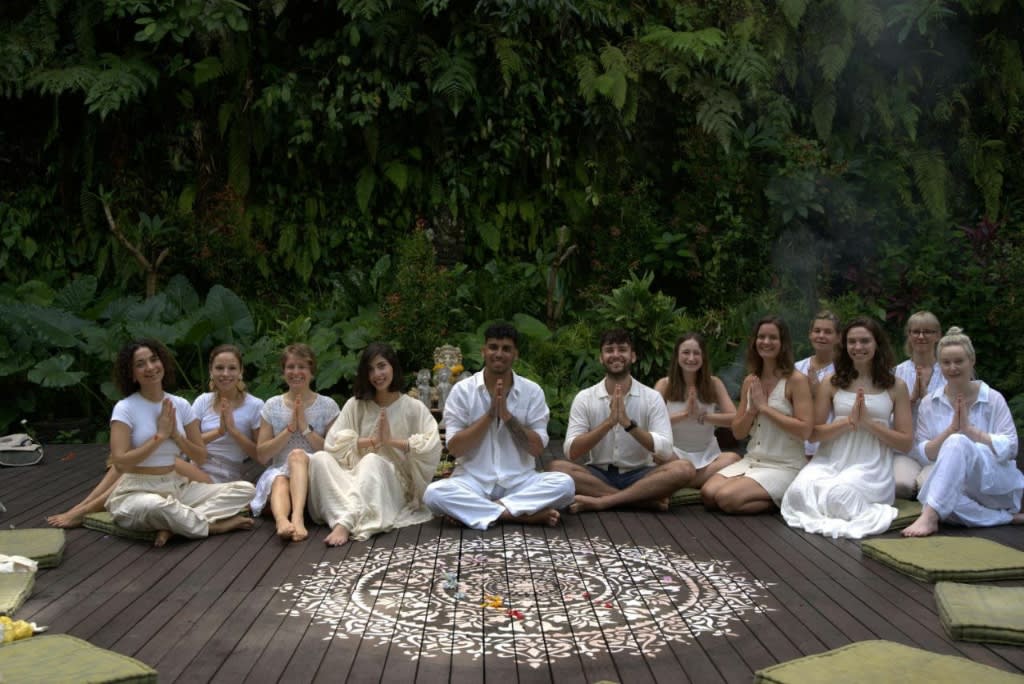
Absolutely. Many students travel solo. Choosing a residential programme with airport pickup, secure on-site accommodation, and a close-knit group (8–10 students) ensures a safe, welcoming, and community-centred journey.
"How Do I Know the School Isn't Just Using 'Himalayan' as Marketing?"
Look at the lead teachers' training, verify that pranayama, anatomy, and philosophy are given equal weight to asana, and make sure the school is open about its curriculum and lineage.
How the Himalayan Roots Connect to Your Training in Bali
Bali is known as the "Island of the Gods"—a place saturated with spiritual reverence, daily temple offerings, and tranquil nature. While Bali is geographically far from the Himalayas, it has become the world's premier gathering place for authentic yoga study.
Teachers trained in traditional Himalayan ashrams have brought this sacred lineage to Bali's serene, tropical environment. This combination is uniquely powerful: you receive the time-tested depth and discipline of Himalayan yoga, surrounded by the warmth, beauty, and supportive community of Ubud.
When you train in a programme that honours these roots, you aren't just learning to demonstrate poses. You are stepping onto a proven path that helps you cultivate a steady mind, breathe with intention, and teach from a place of genuine understanding.
Frequently Asked Questions
1. What exactly are the "Himalayan roots" of yoga?
The Himalayan roots refer to the traditions developed by sages and masters in the Himalayan mountains, passed down through an unbroken teacher-student lineage (parampara). These teachings integrate asana, pranayama, meditation, philosophy, and lifestyle into a complete system.
2. Do I need prior yoga experience to join a Himalayan-style teacher training in Bali?
Not necessarily. Many authentic 200-hour courses are designed for beginner to intermediate practitioners. The most important qualities are curiosity, an open mind, and a willingness to commit to daily practice.
3. How is Himalayan yoga different from modern fitness yoga?
Modern fitness yoga often treats postures purely as physical exercise. Himalayan yoga treats postures as preparation for breathwork and meditation, weaving together ethics, energy channels (nadis), and mind management.
4. Will I learn to teach meditation and pranayama, or just asana?
In a genuine Himalayan-influenced course, you will study breath science, bandhas, mudras, and guided meditation techniques alongside asana, giving you the tools to teach all aspects of yoga confidently.
5. How can I verify a school's claim of "authentic" or "Himalayan" teaching?
Check the teachers' backgrounds and where they studied. Review the detailed syllabus to ensure philosophy, meditation, and anatomy are taught thoroughly, and look for transparent Yoga Alliance accreditation.
6. Is a 200-hour yoga teacher training in Bali enough to start teaching?
Yes. A 200-hour Yoga Alliance certification (RYT 200) is the internationally accepted standard to begin teaching yoga at studios, retreats, or private sessions worldwide.
7. What should I expect from daily life during a residential training?
Expect early mornings, wholesome vegetarian food, immersive practice sessions, and evening rest. Living on-site removes daily distractions, allowing you to absorb the teachings deeply.
8. Can I join a yoga teacher training in Bali if I'm travelling alone?
Yes. The vast majority of our students arrive independently. The small-group environment and shared daily routine create natural, lifelong friendships from day one.
Conclusion and Next Steps
The Himalayan roots of authentic yoga are not a marketing buzzword—they represent a living lineage of wisdom passed down through generations to help human beings live with clarity, health, and peace.
When choosing your training in Bali, look for a school that:
- Features teachers with authentic Himalayan and ashram training.
- Provides a balanced curriculum across asana, pranayama, meditation, philosophy, and anatomy.
- Maintains small, intimate class sizes for personalized mentorship.
- Offers clear certification, honest pricing, and transparent course details.
YogaGarhi's 200 Hour Yoga Teacher Training in Bali and advanced 300 Hour Yoga Teacher Training in Bali in Ubud are built on these exact foundations.
Ready to begin your journey? Check our Course Dates and Fees or reach out to our team with any questions to start planning your training in Bali.

Yogacharya Sachin
Lead Yoga Master & FounderBorn in the foothills of the Himalayas, Yogacharya Sachin has dedicated over 15 years to authentic Hatha, Ashtanga, and Pranayama sadhana. He leads teacher trainings at YogaGarhi with traditional rigor and compassionate guidance.
Meet our full teaching faculty →Join Our Growing Community
Experience authentic Himalayan yoga in the heart of Bali. Small groups, sincere teaching, and a life-changing certification journey.